
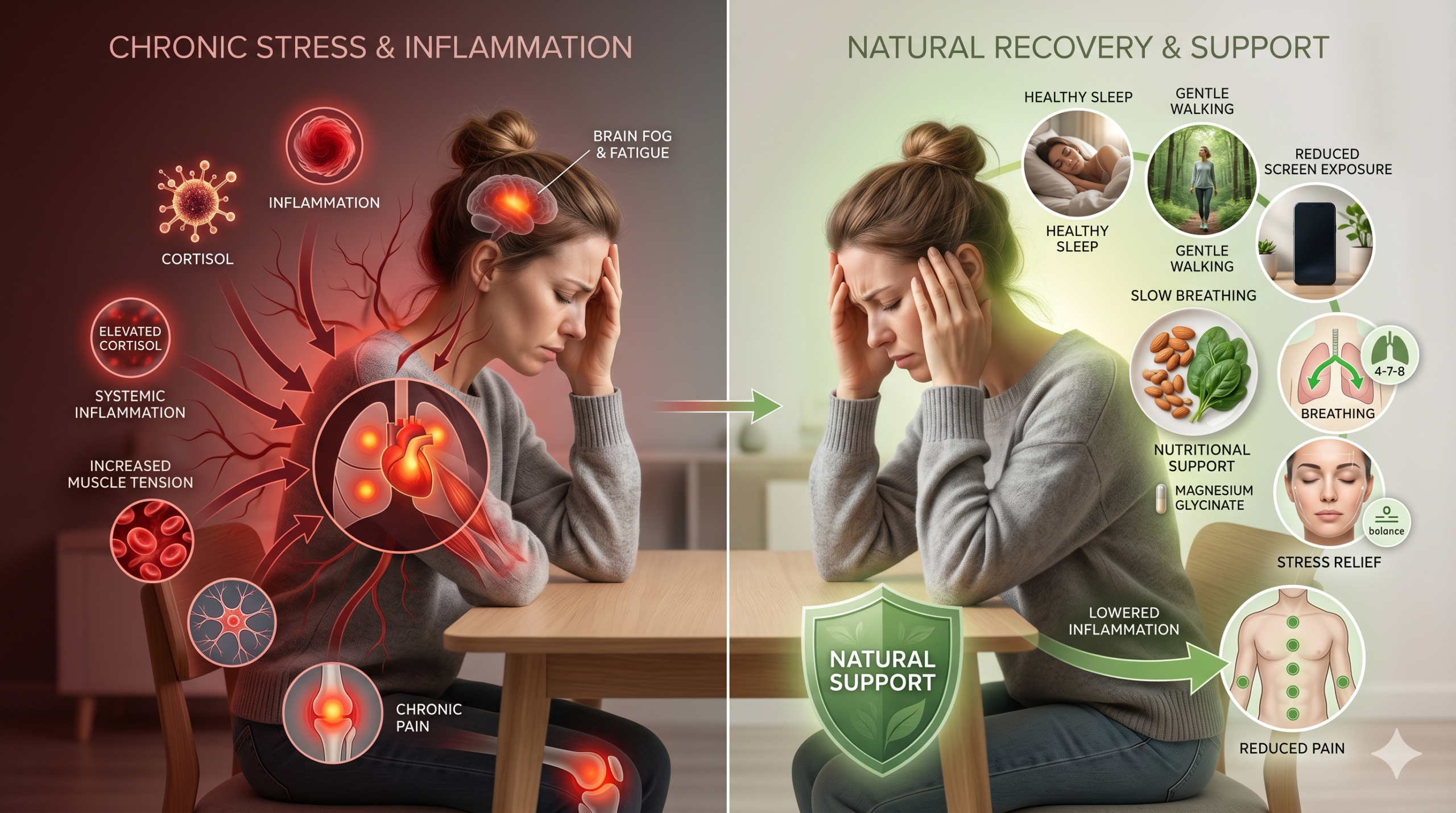
Discover how chronic stress can affect the body, increase inflammation over time, and explore 5 natural strategies that may help restore daily balance and reduce chronic stress inflammation.
✅ 1️⃣ Improve Sleep Quality
Sleep plays a central role in how the body regulates recovery. During deep sleep, several repair mechanisms become more active, while cortisol levels normally decline. Research suggests that repeated sleep restriction may increase inflammatory markers such as IL-6 and C-reactive protein, which are often associated with prolonged internal stress. Even improving sleep consistency over a few nights may support better overall balance.

Chronic Stress Inflammation and Daily Health
Long-term stress may also influence digestion, sleep rhythm, emotional balance, and daily recovery capacity. When stress hormones remain elevated for long periods, the body may struggle to maintain normal inflammatory regulation. This is why simple habits repeated daily often remain more effective than extreme short-term efforts. Studies suggest chronic stress may increase inflammatory markers.
You can also explore understanding inflammation and daily wellness on our website.
Many people notice that reducing evening screen exposure, improving breathing habits, and maintaining regular meal timing may gradually support better nervous system balance and reduce internal stress signals over time.
Gentle walking helps reduce physical tension while improving circulation and oxygen delivery throughout the body. Moderate movement also supports nervous system regulation, which can help lower stress responses over time. Studies suggest that regular low-intensity activity may contribute to lower cortisol exposure and better inflammatory balance compared with prolonged sedentary routines.

✅ 3️⃣ Reduce Evening Stimulation
Late exposure to screens, strong light, or mental overload may delay the body’s transition into rest mode. This can interfere with melatonin production, a hormone closely linked to sleep quality and internal recovery. A calmer evening environment often helps the nervous system shift away from prolonged alertness, which may support lower stress accumulation overnight.

✅ 4️⃣ Practice Slow Breathing
Slow breathing activates the parasympathetic nervous system, which is associated with relaxation and internal regulation. Controlled breathing patterns may help reduce heart rate and improve the body’s response to daily stress. Even a few minutes of slow breathing can support a calmer physiological state.

✅ 5️⃣ Magnesium Support
Magnesium is involved in hundreds of biological reactions, including muscle relaxation and nervous system regulation. It is often discussed in stress-support routines because adequate magnesium levels may help the body respond more efficiently to prolonged tension. Certain forms such as magnesium glycinate are commonly chosen because they are often well tolerated.
✅ 1. Understanding Chronic Stress Inflammation
✅ 2. The Impact of Chronic Stress Inflammation on Health
✅ 3. Exploring the Connection Between Chronic Stress Inflammation and Overall Well-being
✅ Understanding Chronic Stress Inflammation